PROJECT 3 LIGHT
This project proposes a non-denominational chapel for the campus of Farmingdale State College, envisioned as a spiritual space open to people of all beliefs. The design focuses on the use of natural light as the primary element for creating atmosphere, reflection, and meaning.
By studying existing site patterns and seasonal light angles, the chapel’s location, orientation, and form were shaped to respond to both the natural environment and the campus context. Light becomes the guiding force that organizes the space and connects architecture with nature.

Background Research
Unity Temple, designed by Frank Lloyd Wright and completed in 1908, is located in Oak Park, Illinois. It is a non denominational Unitarian Universalist church and is considered one of the most significant works of early modern architecture. The building reflects Wright’s Prairie School principles, emphasizing simplicity, unity, and geometric clarity.


Light plays a critical role in the spiritual experience of Unity Temple. Rather than using traditional stained glass windows, Wright introduced indirect natural light through clerestory windows and skylights. This controlled lighting creates a calm, introspective atmosphere, drawing attention inward and enhancing the sense of spirituality within the space.
The structure is primarily constructed of reinforced concrete, a material choice that was innovative for its time, especially for a religious building. Wright used concrete not only for structural efficiency and cost control but also to create a unified, monumental form that feels solid and grounded. The temple is organized as a centralized, cubic composition, reinforcing a sense of order and collective worship.

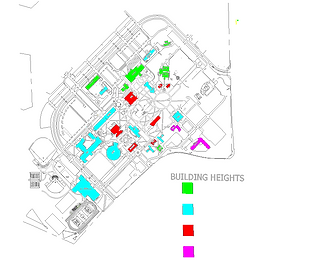
Campus Analysis



Sun Angles

SUMMER

WINTER

SPRING

FALL
Site Selection

Floor Plan and Circulation


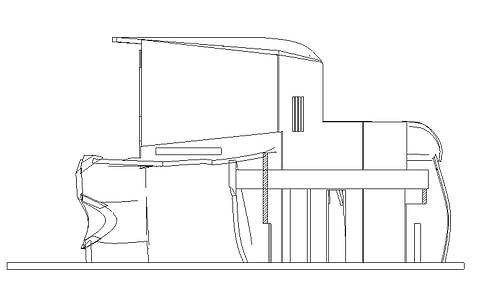
Preliminary 2D Light Sections


Sections



3D


